What is a colloquium?
A “speaking together”.
Colloquium is Latin for a conversation, literally a “speaking together” (con- + loquor, “speak”). The plural is colloquia. As a kind of book, a colloquium is a dialogue written to teach a language: ordinary situations, ordinary words, short exchanges between two or more speakers. They come from three very different worlds.
1 · The ancient school colloquia
The Hermeneumata: a Roman schoolboy’s day.
The oldest are school texts from the Roman Empire, known by the scholarly name Hermeneumata Pseudodositheana. They were made for learning Latin and Greek side by side. One compiler explains why at the start of his book:
Colloquium Monacensia–Einsidlensia · the compiler’s preface
Tap a word — or reveal the translation.
Since I saw that little boys starting their education needed to hear translations of everyday speech, through which they can most easily be taught to speak Latin and Greek… And then, straight away, a schoolboy’s morning:
Colloquium Monacensia–Einsidlensia · a schoolboy’s morning
Tap a word — or reveal the translation.
I woke before dawn; I got out of bed… The colloquia follow the day from there: getting dressed and washed, school and the teacher, lunch, the baths, shopping, dinner. Another colloquium opens with a father’s advice to his son:
Colloquium Harleianum · a father’s advice
Tap a word — or reveal the translation.
My dearest son, take in what I say: the greatest gain is to listen to your father.
The library has four of them, in the Latin text of Eleanor Dickey’s Cambridge edition (the Greek columns, translation and commentary are not reproduced):
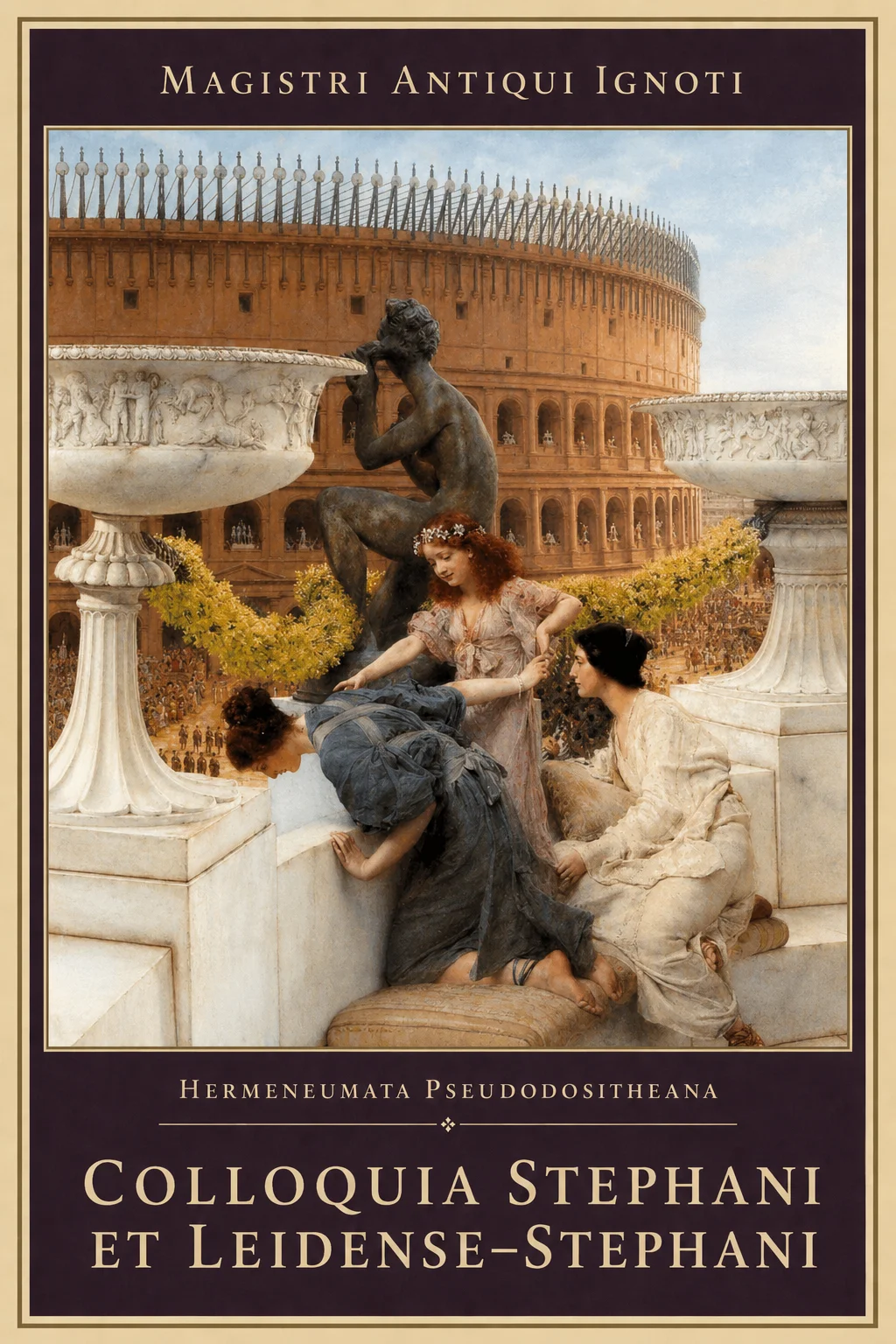
Colloquia Stephani et Leidense–Stephani
A connected narrative and an eclectic miscellany.
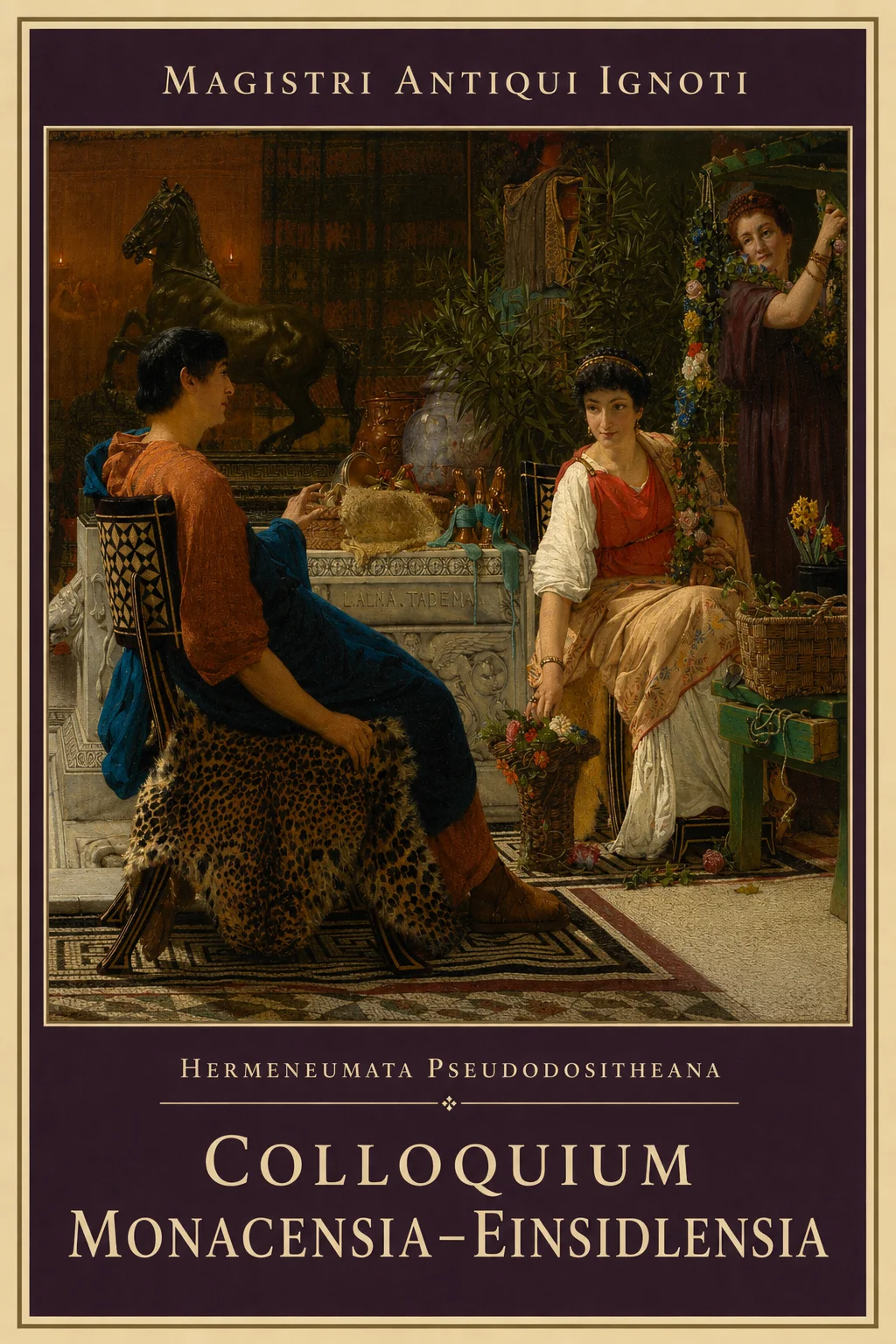
Colloquium Monacensia–Einsidlensia
Two manuscript traditions combined, with conversation patterns and philosophical exchanges.
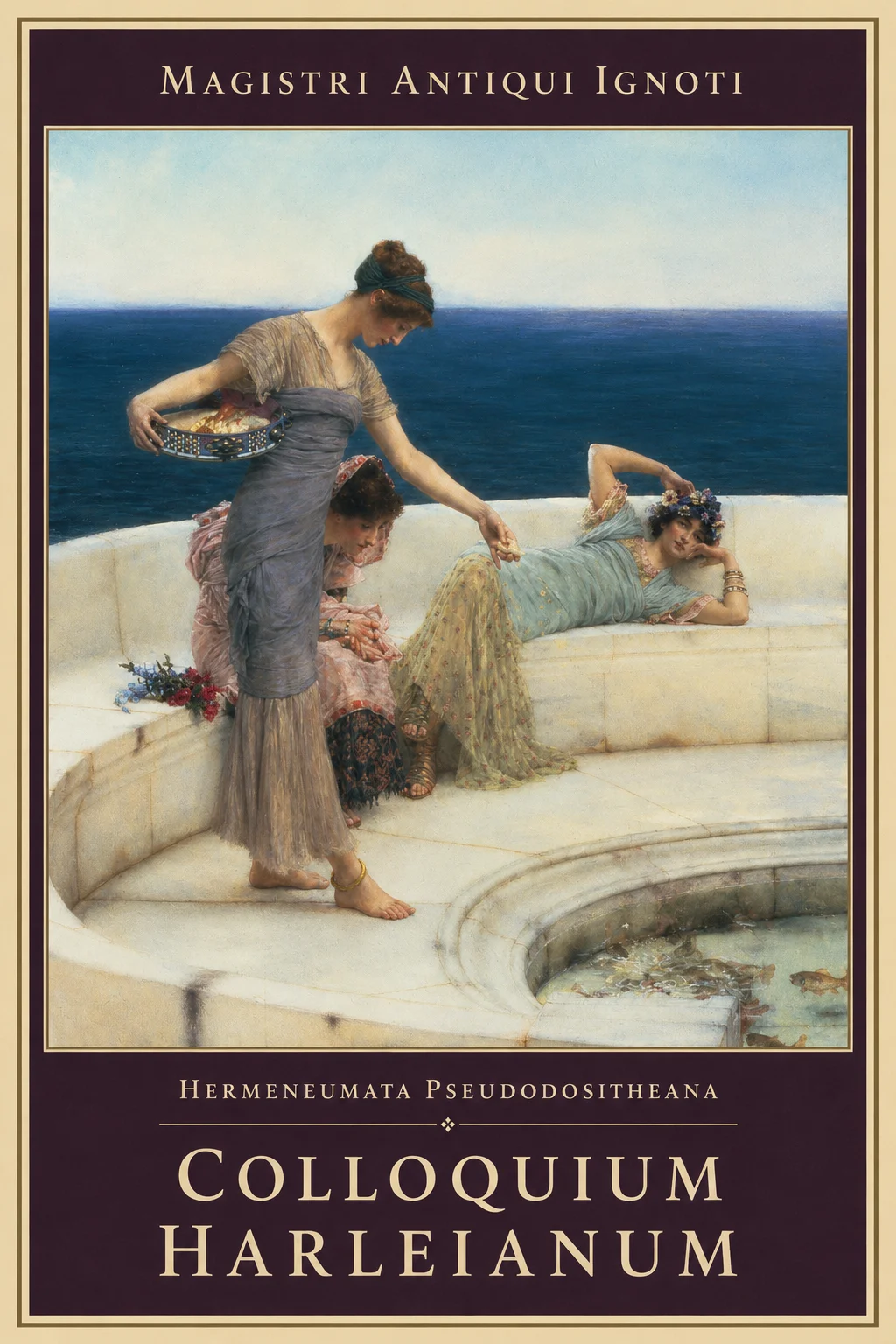
Colloquium Harleianum
Daily school routines, marketplace interactions and domestic life.
Colloquia Montepessulanum et Celtis
A brief structured colloquium and a substantial miscellany of dialogue passages.
2 · The Renaissance school colloquia
Corderius and Erasmus.
When Latin was still the language of the classroom, Renaissance teachers wrote new colloquia for boys who were expected to speak it.
- Corderius (Mathurin Cordier), Colloquia Scholastica (1564). Schoolboys talk about lessons, chores, games, excuses and family, in turns of a few words each. It is the easiest real Latin in the library. Four readers, all from Book I, scoring 1.5 to 2.3. See Corderius in Latin.
- Erasmus, Colloquia Familiaria. Erasmus started with conversation exercises and ended with witty literary dialogues: Naufragium (a shipwreck, 4.7) and Diversoria (inns, 4.8). These are colloquia you read for pleasure. See Erasmus in Latin.
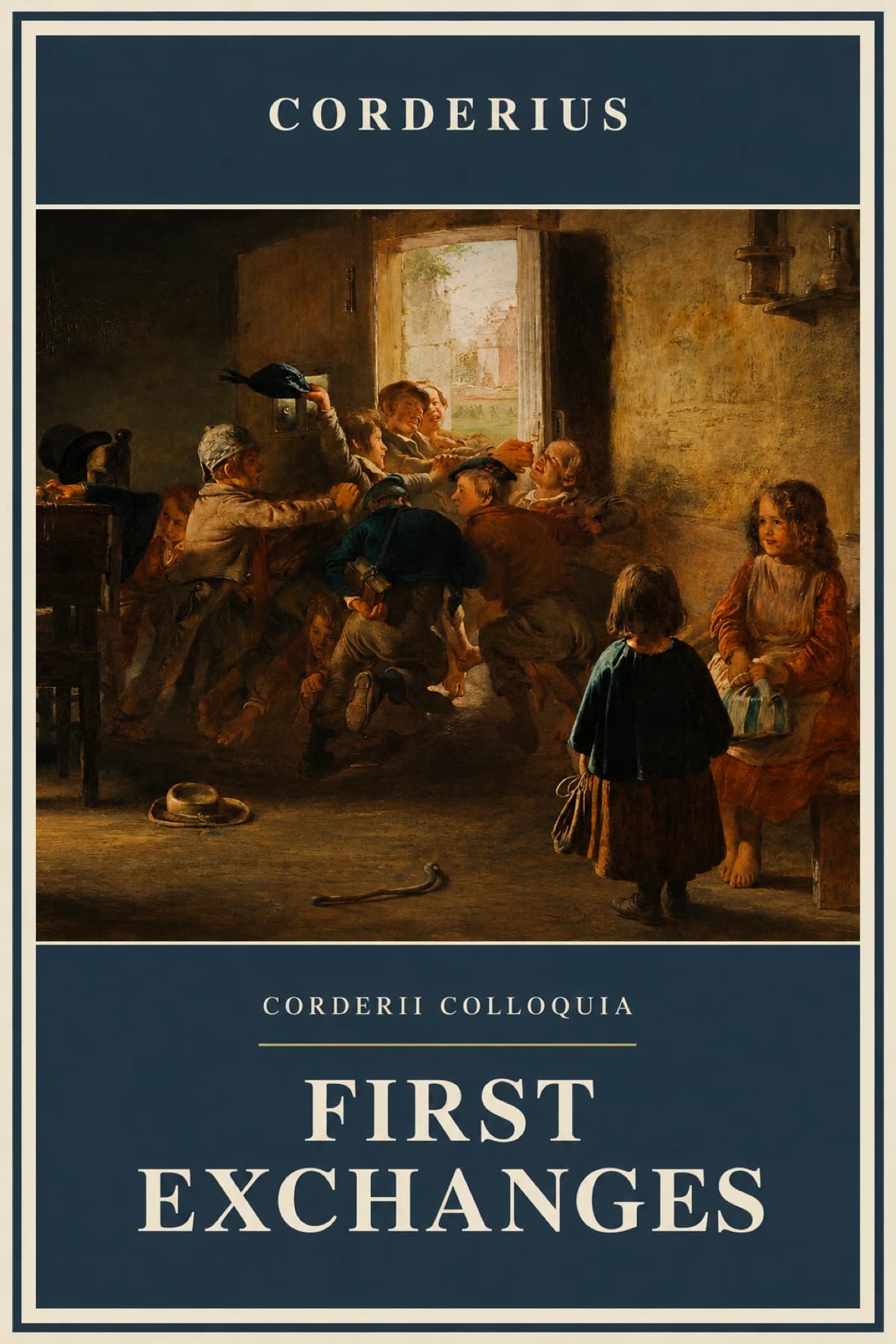
Corderius: First Exchanges
Sixteen short classroom dialogues of first greetings, breakfast and everyday errands.
Naufragium
A vivid and darkly comic account of a disastrous sea voyage.
3 · Modern classroom dialogues
Initium.
Initium (R. B. Appleton, 1.3) builds a whole beginner’s course out of tiny classroom dialogues. If Corderius feels like a jump, start here.
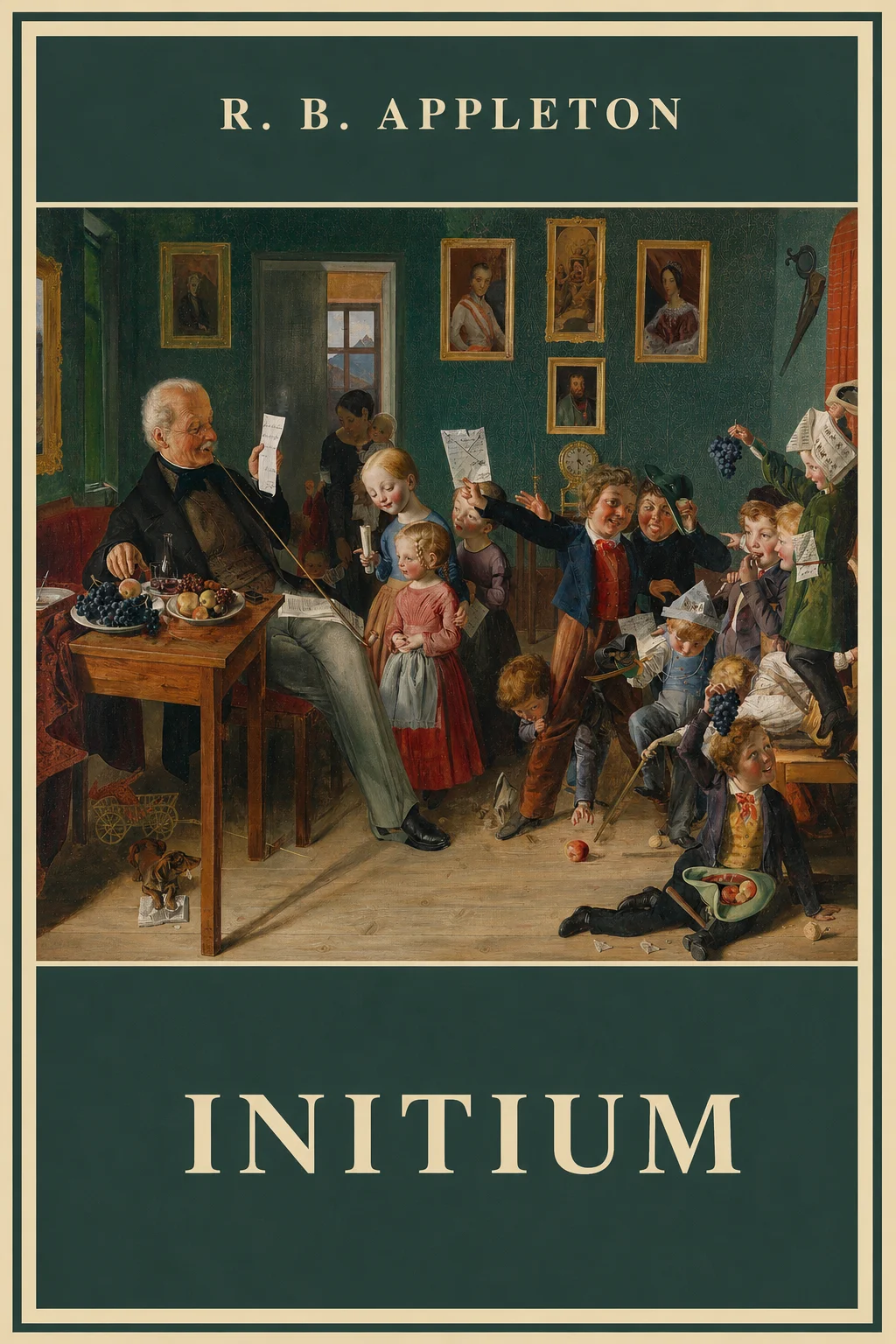
Initium
A beginner sequence of tiny classroom dialogues to help you learn basic vocabulary and become comfortable reading.
Which colloquium should I read first?
From easiest to hardest, on Librorum Capsula’s 1–11 difficulty scale:
- Initium (1.3), modern classroom dialogues.
- Corderius: First Exchanges (1.5), then the other three Corderius readers (1.7–2.3).
- The ancient colloquia (2.8–3.0): a step up, with older and more varied vocabulary.
- Erasmus, Naufragium (4.7) and Diversoria (4.8), literary dialogues.
Why read colloquia?
- Everyday words. Textbooks and authors are full of war and politics. Colloquia are about breakfast, homework and buying fish: the words you need to think in Latin.
- Short turns. A line is often two or three words. You get the satisfaction of finishing something every few seconds, and you can read a whole colloquium in one sitting.
- Built for speaking. These were written to be said aloud. Read them out, or take a part with a friend.
- Real history. The ancient colloquia are some of the best evidence we have for daily life in a Roman school, written by people who taught in one.
Read next
Corderius (Mathurin Cordier): Colloquia Scholastica in Latin → · Erasmus in Latin → · What to read after Familia Romana →