The book
The first reader everyone recommends.
Francis Ritchie wrote these simplified stories for schoolboys. John Copeland Kirtland’s American edition, Ritchie’s Fabulae Faciles: A First Latin Reader (1903), made them a classroom standard, and the book is still one of the most often recommended to read after a beginner course.
The four stories: Perseus, from his birth to Medusa and Andromeda · Hercules, his labors and death · Jason and the Argonauts and the Golden Fleece · Ulysses’ wanderings on the way home from Troy. They are written in the kind of Latin you will meet in Caesar and Nepos, so they are a bridge to real authors.
What you get
All four stories, about 11,000 words.
What you get is the reading: all four stories, with a definition, lemma and form on every word. What you don’t get is the editions’ notes, vocabulary lists or exercises. Every word is already defined in the reader, so you don’t need them to read.
Perseus
The myth of Perseus, from his birth through the slaying of Medusa and the rescue of Andromeda, in simplified classical Latin.
Hercules
The labors and death of Hercules, the strongest of the heroes, in simplified classical Latin.
Jason and The Argonauts
Jason's voyage aboard the Argo in search of the Golden Fleece, in simplified classical Latin.
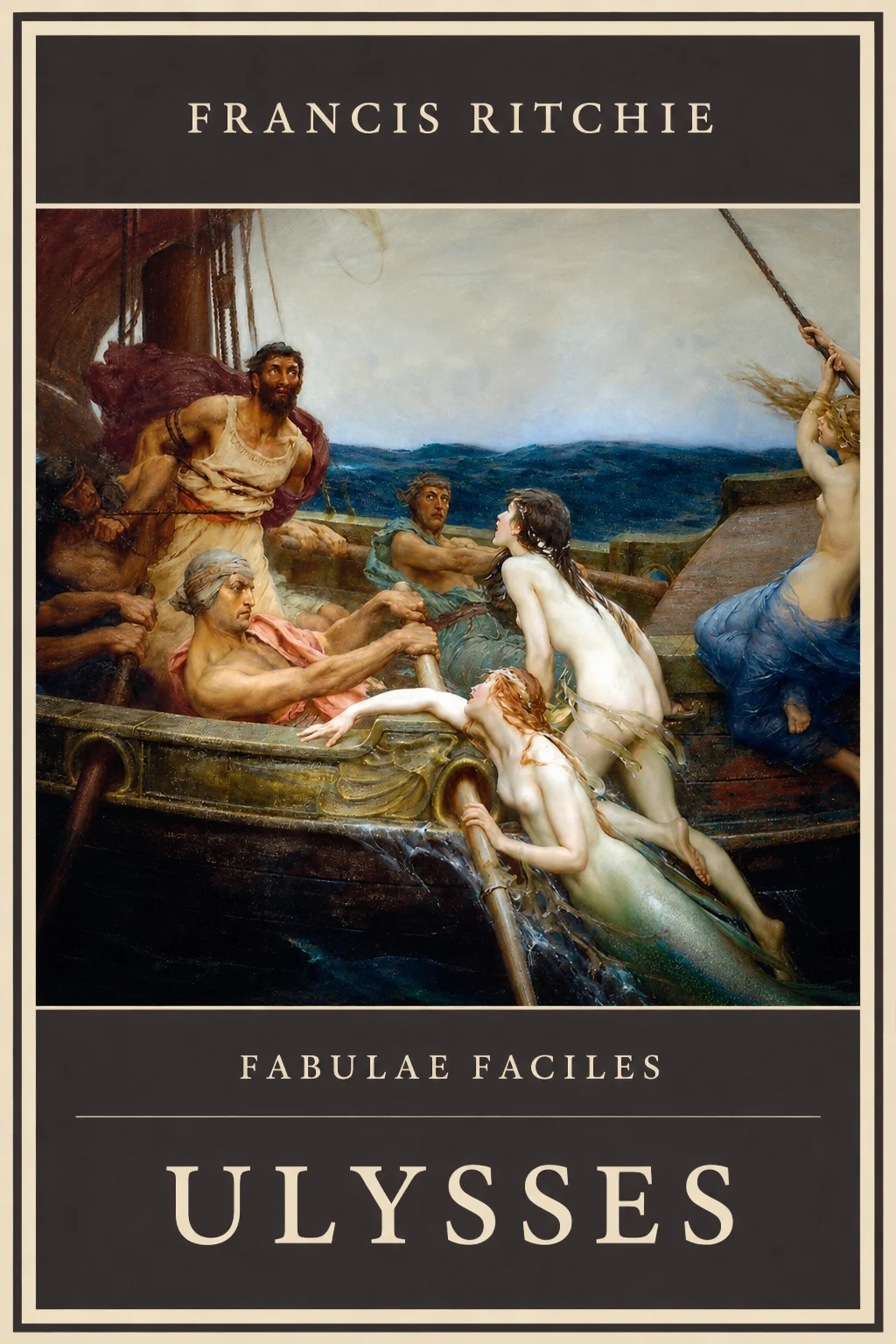
Ulysses
The wanderings of Ulysses on his long journey home from Troy, in simplified classical Latin.
A taste of the Latin
Perseus in the box.
Tap any word for its meaning, lemma and form:
Fabulae Faciles · Perseus 1
Tap a word — or reveal the translation.
Difficulty
Start with Perseus.
The stories score 2.9 (Perseus) to 4.1 (Ulysses) on Librorum Capsula’s 1–11 scale. Perseus is the shortest and easiest; read it first. Hercules is the longest at about 4,500 words. See what to read after Familia Romana and after LLPSI for where Fabulae Faciles fits among the first books to try. For more myths a step harder, see Fabulae Virginibus Puerisque.