Who is Septimus?
A schoolboy in Nero’s Rome.
Septimus is the hero: a British schoolboy who knows a bit of Latin and Roman history from school, and who is about to need all of it. Waiting for his Uncle Julius in a museum, he becomes sure the Roman busts are watching him. Then one of them moves, and a door opens.
On the other side is a long straight road lined with cypresses. A traveller in a carriage takes him to Rome, to an inn in the Suburra, where a rude stranger in a workman’s clothes turns out to be Nero himself. Septimus is thrown in a dungeon and condemned to seven labours, six of them in the Underworld: a hair from an ancient hero’s head, Hannibal’s famous vinegar, the pen of the poet Vergil…
Why it’s fun to read
Most first readers are dull. This one isn’t.
The authors said so themselves in their 1936 preface: they wrote Septimus because the readers available were “dull from the point of view of subject-matter”. So they wrote an adventure, and a comedy. In the Underworld, Septimus annoys Decius Mus, gets a lecture on history books from Camillus (with Livy listening), is nearly killed by Hannibal, and watches Cicero, Marius, Sulla, Pompey and Catiline argue over who was the greatest Roman. Cato can’t stop talking about Carthage. And Nero is waiting at the end.
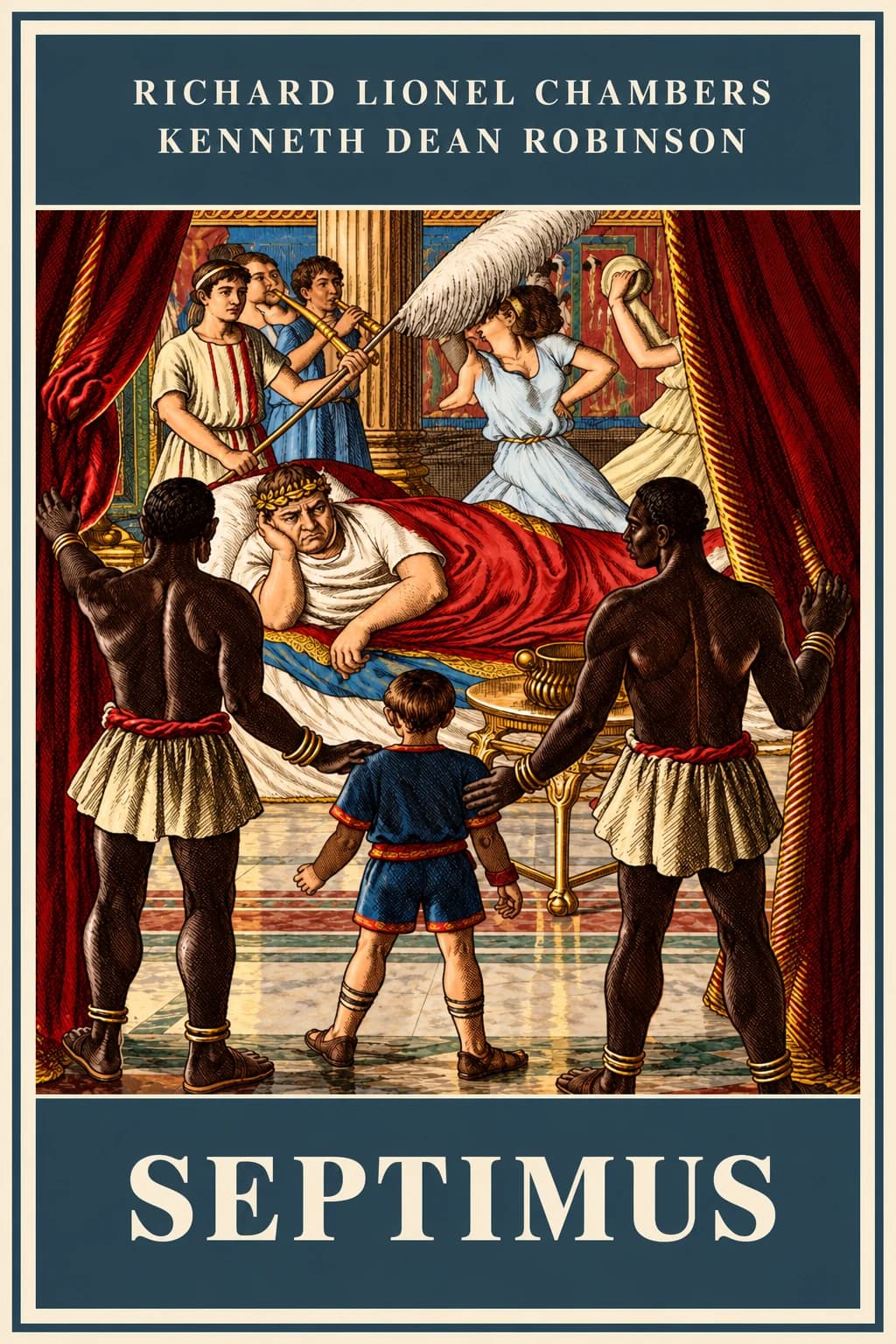
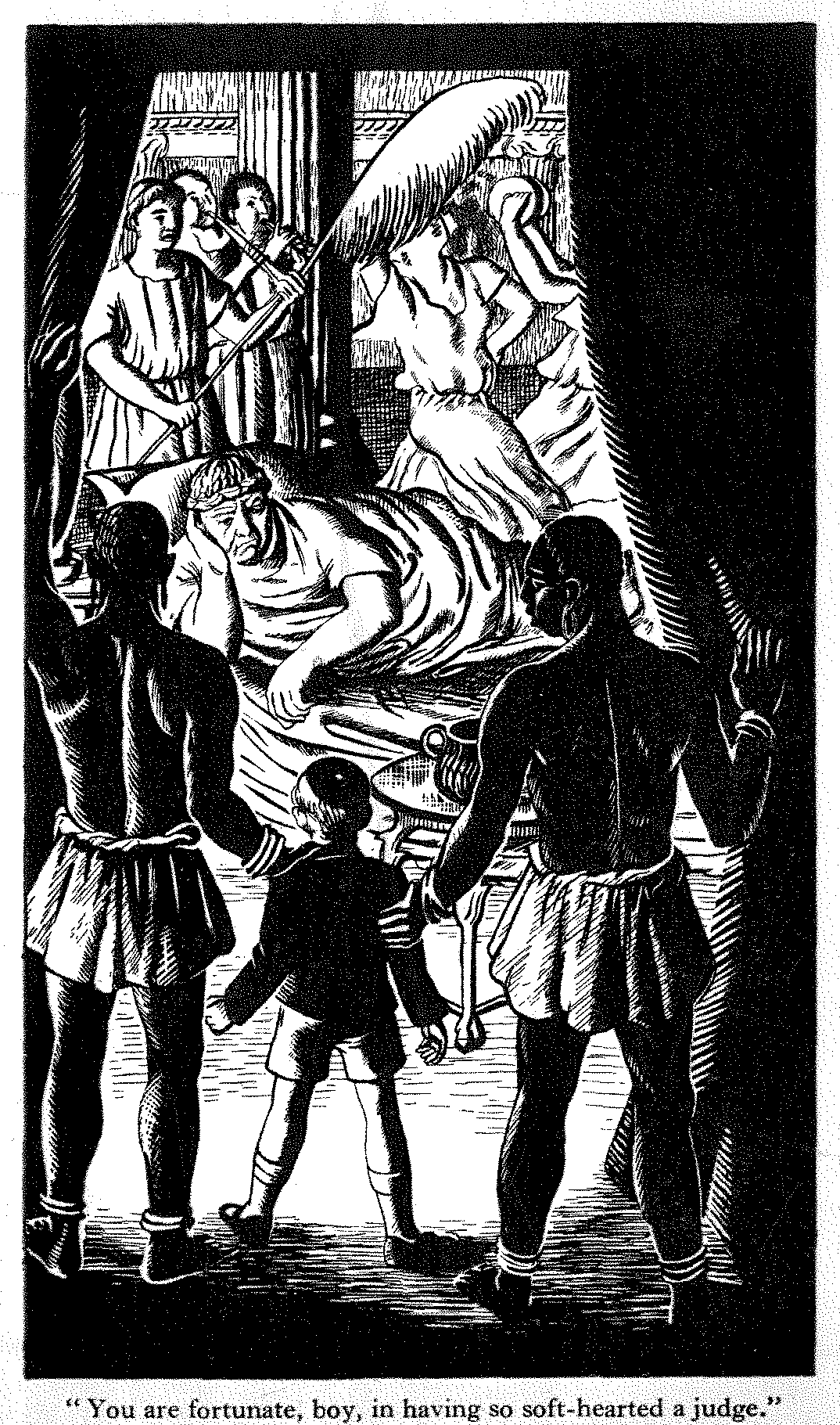
Half the Latin blocks are dialogue, short speeches between characters, so the book reads quickly. It is illustrated with C. J. McCall’s drawings.
A taste of the Latin
Three samples.
Tap any word for its meaning, lemma and form, or show the translation. This is how every sentence works in the reader. The story begins:
Septimus · Part I, §1
Tap a word — or reveal the translation.
At the river of the dead, Charon hears his name:
Septimus · Part I, §16 · Charon
Tap a word — or reveal the translation.
And Septimus faces down Hannibal:
Septimus · Part II, §13 · Hannibal
Tap a word — or reveal the translation.
After Familia Romana
Is Septimus the right book after Familia Romana?
Yes, as a fun, fast book to read for fluency once you have finished a textbook. It is easier than the end of Familia Romana, and that is exactly why it works: you can read long stretches of story without stopping to look things up. Septimus was written for the first year of a Latin course.
Here is how it compares on Librorum Capsula’s 1–11 difficulty scale, which also measures the chapters of Familia Romana:
- Familia Romana, Chapter I: 1.0
- Familia Romana, Chapter XV: 2.5
- Familia Romana, Chapter XXV: 3.5
- Septimus, the whole book: 3.4 (it opens at 2.6 and its hardest passages reach 4.7)
- Familia Romana, Chapter XXXV, the last chapter: 4.7 (it opens at 4.1 and peaks at 5.3)
- Ad Alpes, the whole book: 4.4 (3.4 to 5.8)
So Septimus as a whole sits about where Chapter XXV of Familia Romana does, and its hardest passages only reach the difficulty of the final chapter. If the last chapters of Familia Romana still take effort, Septimus will feel relaxed, and you can start it from around Chapter XXV. Librorum Capsula doesn’t contain Familia Romana; the scores are our measurement of its chapters.
It also gives you help a textbook doesn’t: each section opens with a one-line English summary of what is about to happen, and the story is framed by short English chapters at the start and end. You always know where you are, so your effort goes into the Latin.
At about 10,000 words of Latin it is a real book, not a handful of passages. When you finish, the next step up is Ad Alpes (4.4 overall, climbing to 5.8). See also What to read after Familia Romana.

Ad Alpes
A Roman family’s journey home to Italy, in one continuous story.
In the reader
Forty-seven Latin sections, with every word defined.
Septimus: A First Latin Reader by R. L. Chambers and K. D. Robinson (Oliver and Boyd, 1936), with C. J. McCall’s illustrations. 47 Latin sections in two parts, about 10,000 words of Latin. Long vowels are marked throughout, and every Latin word has a definition, lemma and form. The book’s English preface and its introduction on Roman history are included too.