The story
An island with no grass and a slow boil.
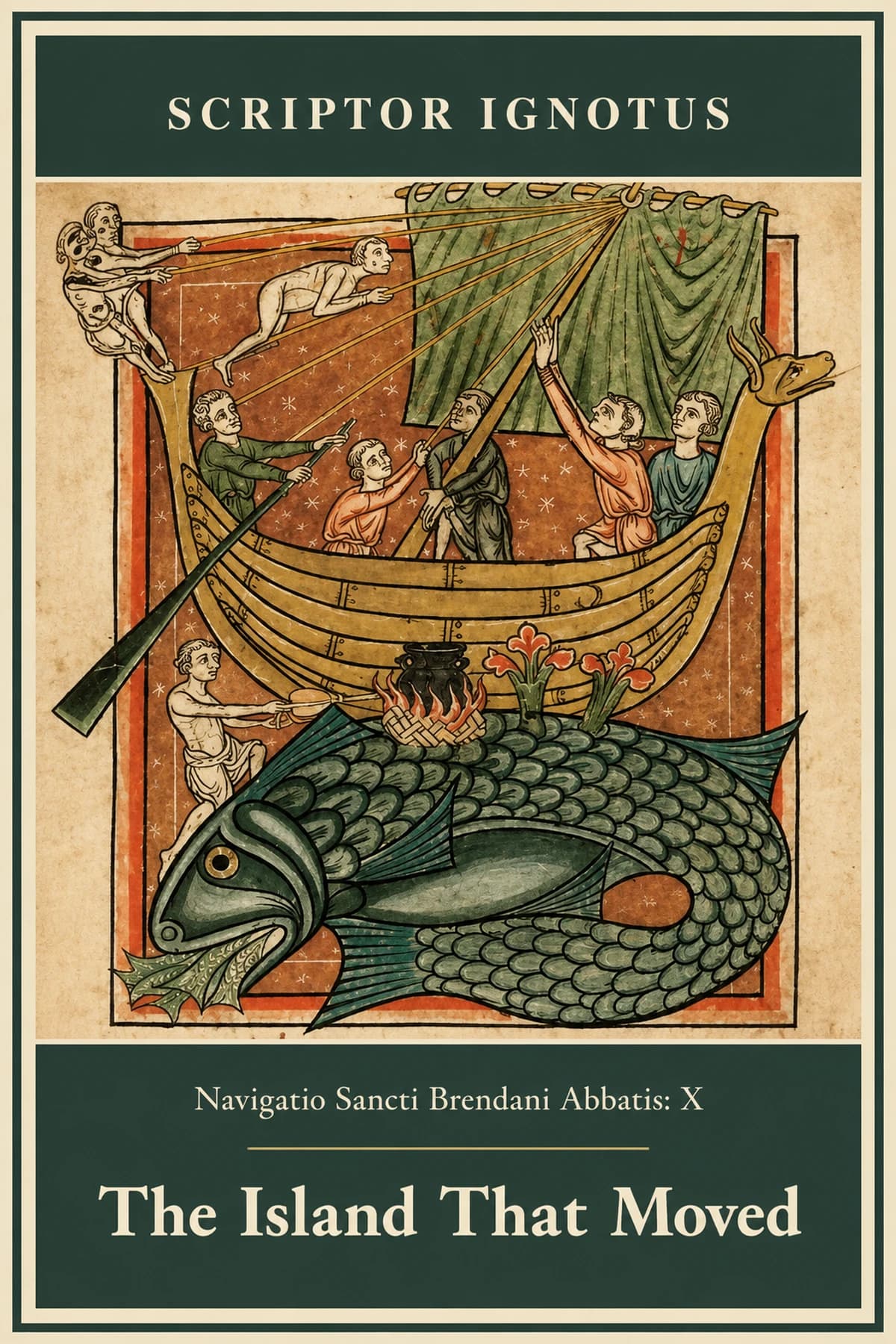
Brendan’s ship comes to an island and has to stop before the harbour. He tells the monks to climb out into the sea and tow the ship in with ropes. The island is bare rock with no grass, a scattering of trees and not a grain of sand on the shore. The monks spend the night praying outside the ship, while Brendan sits inside, because he knows what the island really is and does not want to frighten them:
Navigatio Sancti Brendani · The island that moved
Tap a word — or show the glosses under every word.
Meanwhile, as the brothers spent the night in prayer and vigil outside the ship, the man of God sat inside: for he knew what kind of island it was, but he would not say, so that they would not be terrified.
The fire
“The island began to move like a wave.”
In the morning the priests say Mass and the brothers carry raw meat and fish ashore to salt, then put a cauldron on the fire:
Navigatio Sancti Brendani · The island that moved
Tap a word — or show the glosses under every word.
While they were feeding the fire with wood and the cauldron had begun to boil, the island began to move like a wave.
The brothers run for the ship, calling on their holy father’s protection. Brendan drags each of them in by the hand, and they leave everything behind and sail away. The island drifts off into the Ocean, and they can see their fire burning for more than two miles.
The explanation
Jasconius, the first of all the creatures that swim.
Brendan asks the shaken brothers if they were amazed at what the island did. They were, and terrified. He tells them not to be afraid: God revealed it to him in a vision the night before.
Navigatio Sancti Brendani · The island that moved
Tap a word — or show the glosses under every word.
It is not an island where we were, but a fish, the first of all the creatures that swim in the Ocean. It is always trying to join its tail to its head, and cannot, because of its length. Its name is Iasconius.
An old sea tale
The island that turns out to be a whale.
The reader prints one short note from Heinrich Zimmer (1889). He observes that the Iasconius episode, and the battle of the two sea-monsters, have no model in the Irish Voyage of Máel Dúin, but are shared by the Latin Navigatio and the younger Irish Imram Brenaind, and he points to other Brendan-linked parallels for the motif.
How hard is the Latin?
Plain narrative, a little speech.
The island episode scores 4.5 on Librorum Capsula’s 1–11 difficulty scale. It is told in short sentences, and the vocabulary of ships, fire and fish is easy to learn. What to watch for:
- Medieval spelling and forms. Medieval spellings such as e for ae are kept as printed, and the verbs use the pluperfect subjunctive (cantāssent, condīssent) where classical Latin would use the imperfect.
- Direct speech. Brendan’s explanation is given in quotation marks, with dīcēns and aiunt to introduce it.
If medieval Latin is new to you, see our guide to Medieval Latin.
In the reader
The whole episode, with every word defined.
The reader has the Jasconius episode of the Navigatio Sancti Brendani Abbatis, a selection of about 256 words in five paragraphs. Every word has a definition, lemma and form. Display text is macronized as an editorial layer, and the glosses are the reader’s own work.
Read next
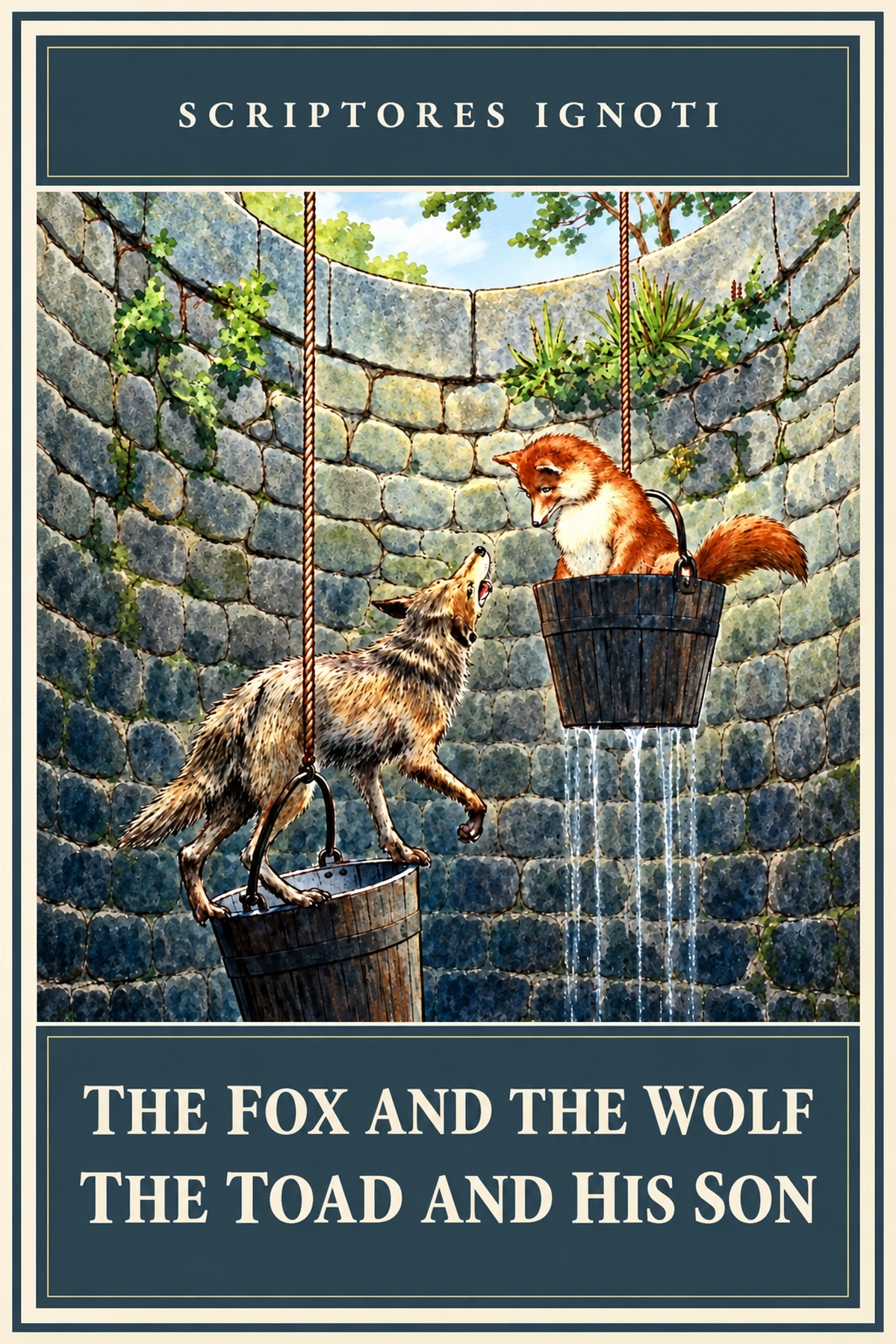
Two Medieval Fables
A toad, a hare, a fox and a wolf, in short medieval stories.
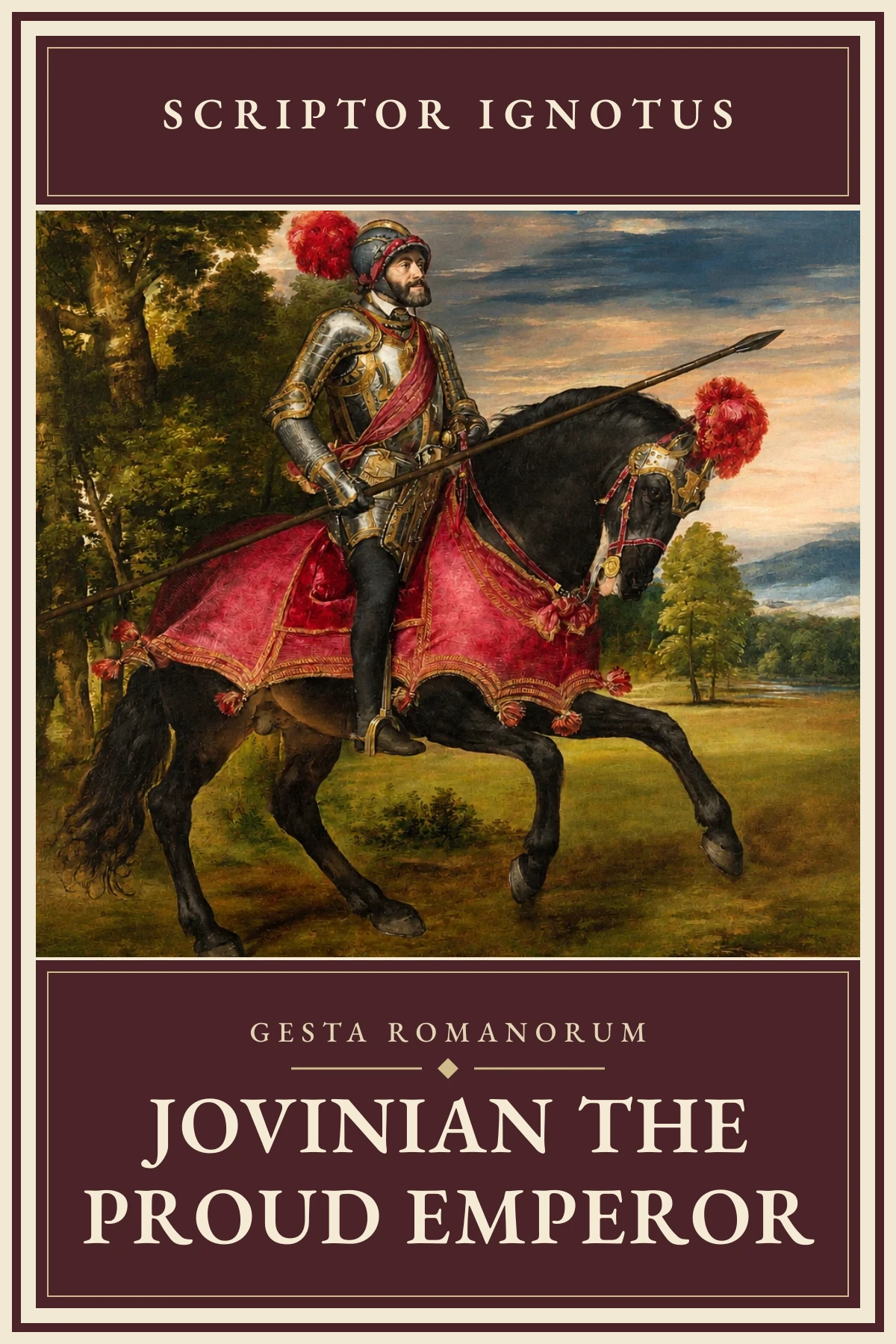
Jovinian the Proud Emperor
An emperor loses his name and his throne in a single morning.
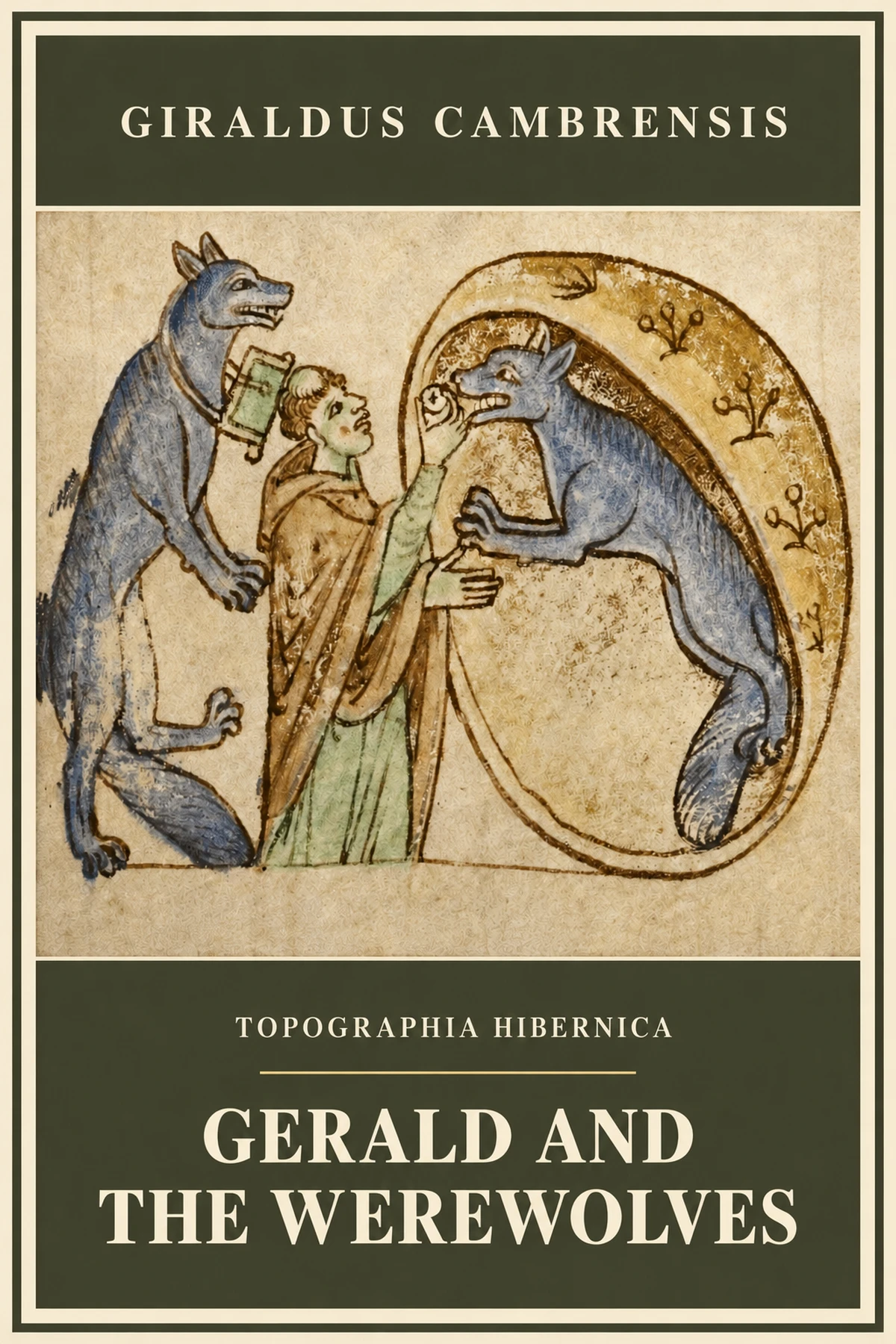
Gerald and the Werewolves
Gerald of Wales and the werewolves of Ossory.
Sources & further reading
- Navigatio Sancti Brendani Abbatis — the Jasconius episode (the reader does not name a particular edition)
- Heinrich Zimmer (1889), the note on the Iasconius passage, as printed in the reader