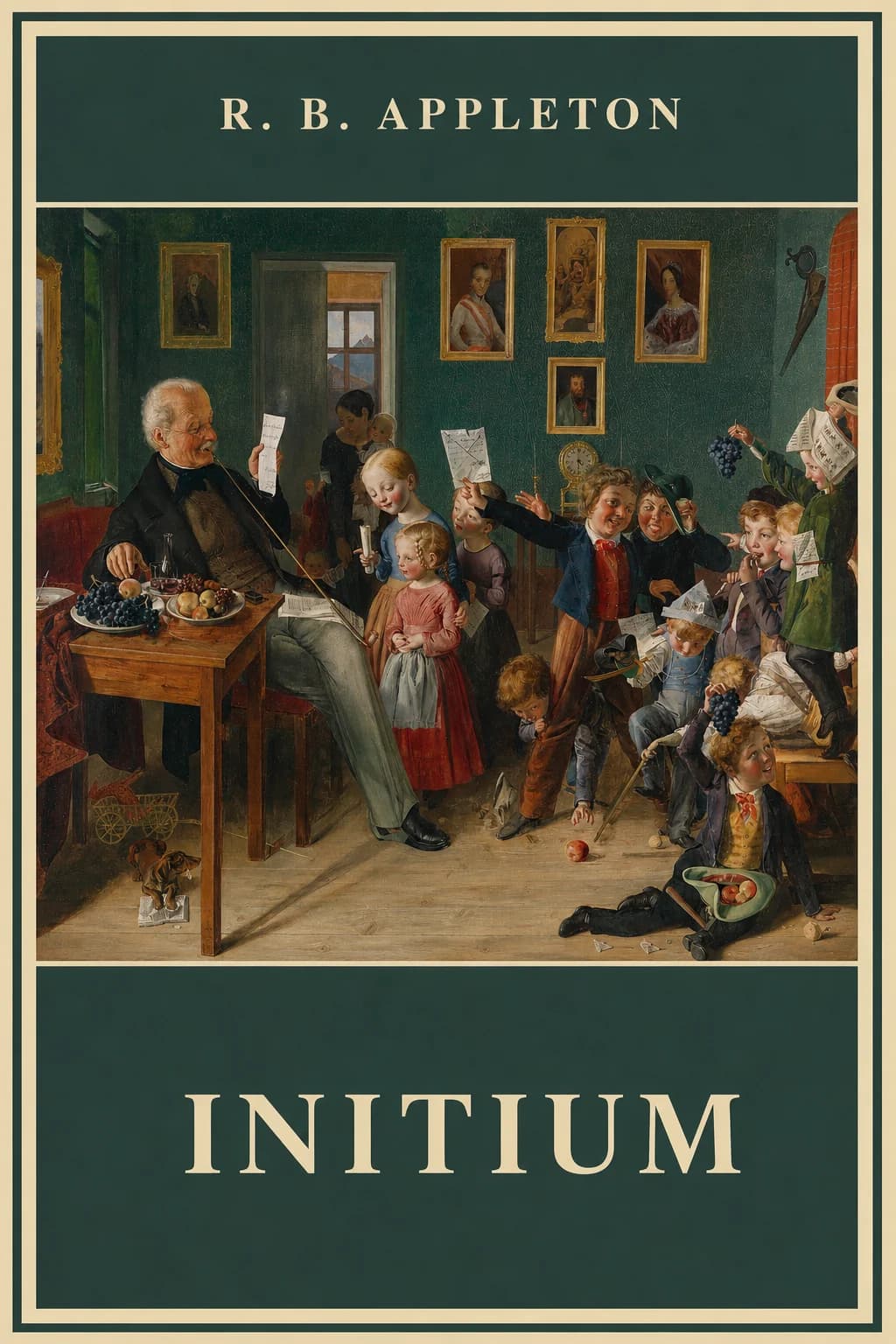
The book
A Latin course with no English in it.
R. B. Appleton wrote Initium for the direct method: Latin taught in Latin, the way modern languages were being taught in schools a century ago. It was first published in 1916 and revised in a second edition, and Cambridge University Press reprinted it in 2016.
It is built from twenty-four short pieces. The first are dialogues about the body, pupils, the classroom and a soldier. By the end there are stories and scenes: a stepmother and her stepson, a boy off sick, a boy who skipped school, a market, a temple, a trick, an air journey, fishermen and a slave sale. The book closes with a handful of songs.
What you get
All twenty-four readings, plus the pieces the second edition dropped.
Initium is in the reader in full as reading, about 7,600 words. A separate book, Roman Stories (about 1,200 words), keeps nine stories, dialogues and poems from the first edition that the second edition left out.
What you get is the reading: every dialogue and story, with a definition, lemma and form on every word. What you don’t get is the appended book of exercises and grammar questions. A few dialogues keep their short Latin heading as printed (for example Dēclīnātiō secunda), but there is nothing to do except read.
Initium
A beginner sequence of tiny classroom dialogues to help you learn basic vocabulary and become comfortable reading.
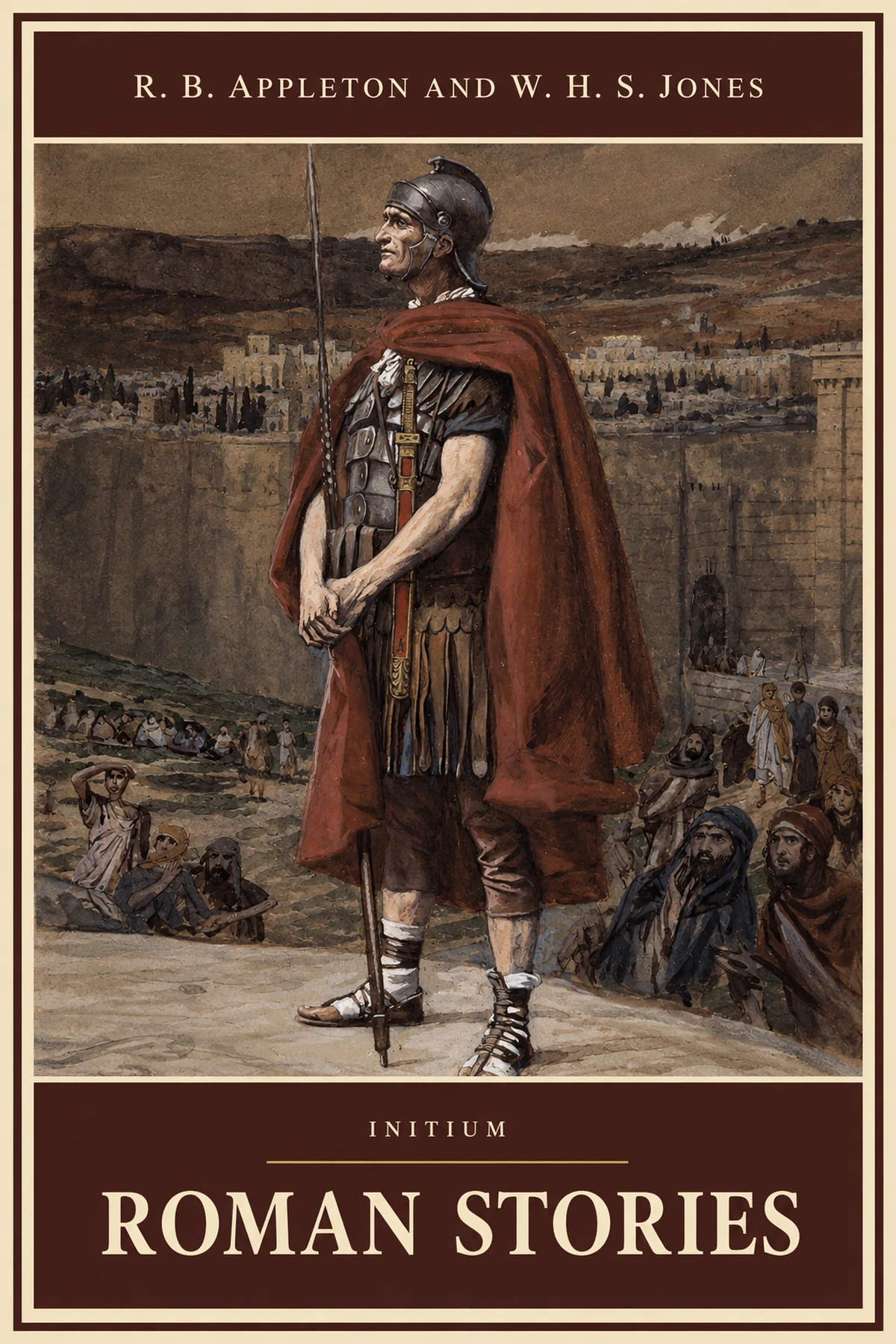
Roman Stories
Nine short Roman stories, dialogues, and poems preserved from the first edition of Initium.
A taste of the Latin
A knock at dawn.
Tap any word for its meaning, lemma and form. From the dialogue Salūtātor, where a client turns up far too early to greet his patron:
Initium · Salūtātor
Tap a word — or reveal the translation.
Difficulty
One of the easiest books in the library.
Initium scores 1.3 on Librorum Capsula’s 1–11 scale. It opens at 0.8 and its hardest passages reach 2.1. Roman Stories is a step up at 3.0. After Initium, the natural path is the books from the same direct-method circle: Primus Annus, then Pons Tironum, then Puer Romanus. For more dialogue, see the guide to Latin colloquia.