Where it comes from
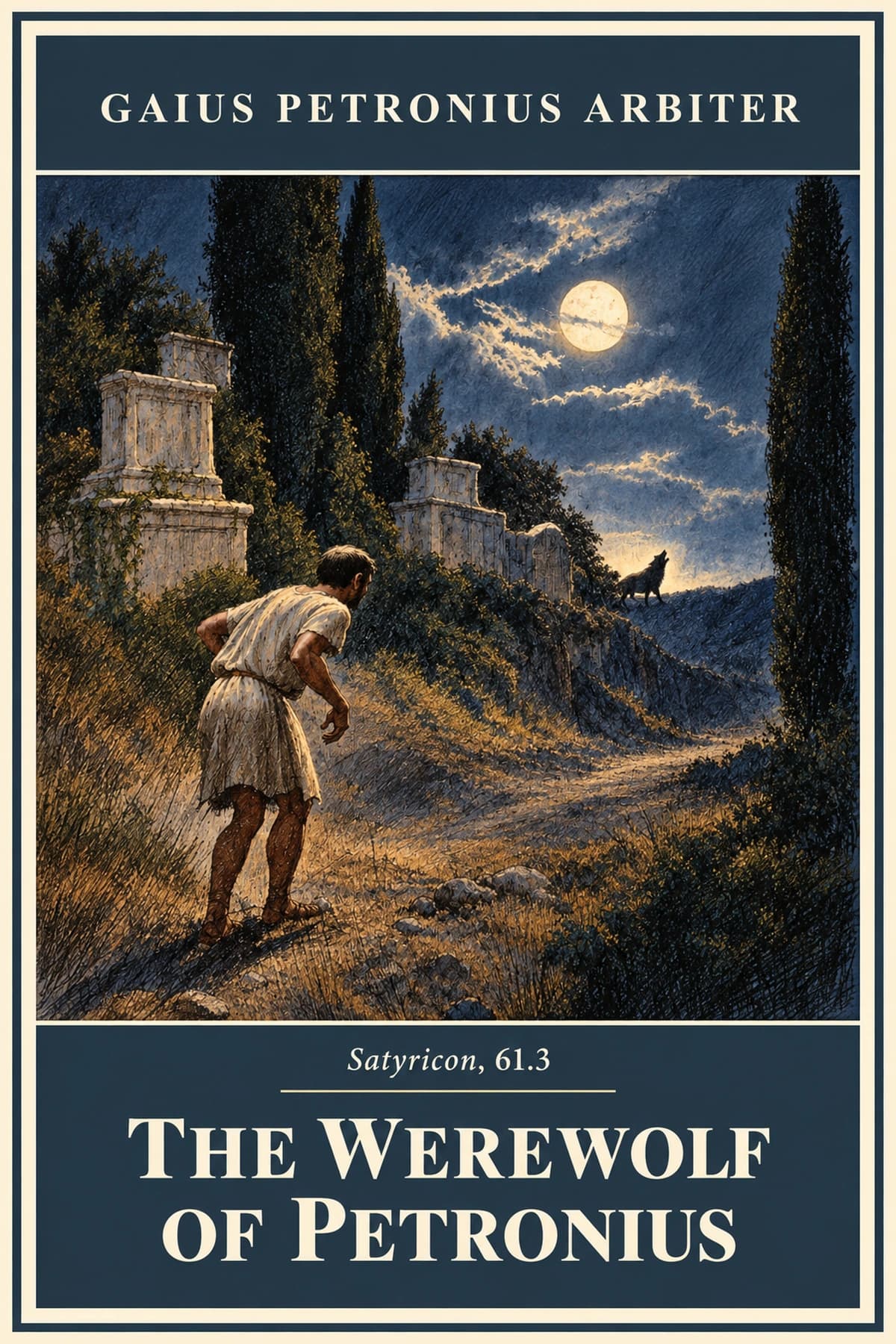
The werewolf at Trimalchio’s dinner.
The story is told at the Cena Trimalchionis, Trimalchio’s dinner, the longest surviving episode of Petronius’s Satyricon. The rich, vulgar host turns to his guest Niceros and asks him to tell “that thing that happened to you”. Niceros is afraid the educated guests will laugh at him, but he tells it anyway. Satyricon 61 is the set-up; 62 is the werewolf.
The story
A soldier, a graveyard and a wolf.
Back when he was still a slave, Niceros was in love with Melissa, the wife of an innkeeper. When her husband dies at a farm outside town, Niceros wants to go to her. His master is away in Capua, so he talks a guest of the house into coming with him: a soldier, “as strong as Orcus”.
They set out around cockcrow. The moon is as bright as midday. On the road out of town, among the tombs, the soldier stops, strips, and lays his clothes by the road. Niceros is frozen with fear. Then the soldier urinates in a circle around his clothes and turns into a wolf, howls, and runs off into the woods. When Niceros goes to pick up the clothes, they have turned to stone.
He gets to Melissa’s farm half dead with fright. She tells him that a wolf got in and slaughtered the flock, but did not get away unhurt: a slave drove a spear through its neck. At daybreak Niceros runs home past the spot where the clothes had been. Nothing is there but blood. At home he finds the soldier in bed, and a doctor treating his neck.
In Latin
The transformation.
Tap any word for its meaning, lemma and form, or show the translation of the whole passage. This is how every sentence works in the reader.
Petronius · Satyricon 62
Tap a word — or reveal the translation.
Then Niceros does what every teller of a tall tale does:
Petronius · Satyricon 62
Tap a word — or reveal the translation.
And the line the story ends on:
Petronius · Satyricon 62
Tap a word — or reveal the translation.
What the Latin is like
Easy sentences, spoken Latin.
It scores 5.7 on Librorum Capsula’s 1–11 difficulty scale (reviewed): Intermediate. The opening is easier (5.0), the peak 7.5. The sentences are short and plain, a man telling a story out loud. What makes it harder is the Latin he tells it in. Niceros is a freedman, and Petronius gives him everyday spoken Latin, the kind of language textbooks avoid: apoculāmus nōs (“we take ourselves off”), gaudimōnium for gaudium, fefellitus sum for falsus sum, and idioms like the soul in the nose. That is exactly why it is worth reading, and why a definition on every word helps.
The Latin word for werewolf
Versipellis, lycanthropus, lupus.
- versipellis: the word Niceros uses. Literally a “skin-changer” (vertō, turn, + pellis, skin).
- lycanthropus: a Greek loanword (“wolf-man”), used in the title of the medieval Arthur and Gorlagon: Narratio de Arthuro rege Britanniae et rege Gorlagon lycanthropo.
- lupus: just “wolf”. Niceros says the soldier lupus factus est, “became a wolf”.
More Latin werewolf stories
Gerald and the Werewolves, and Arthur and Gorlagon.
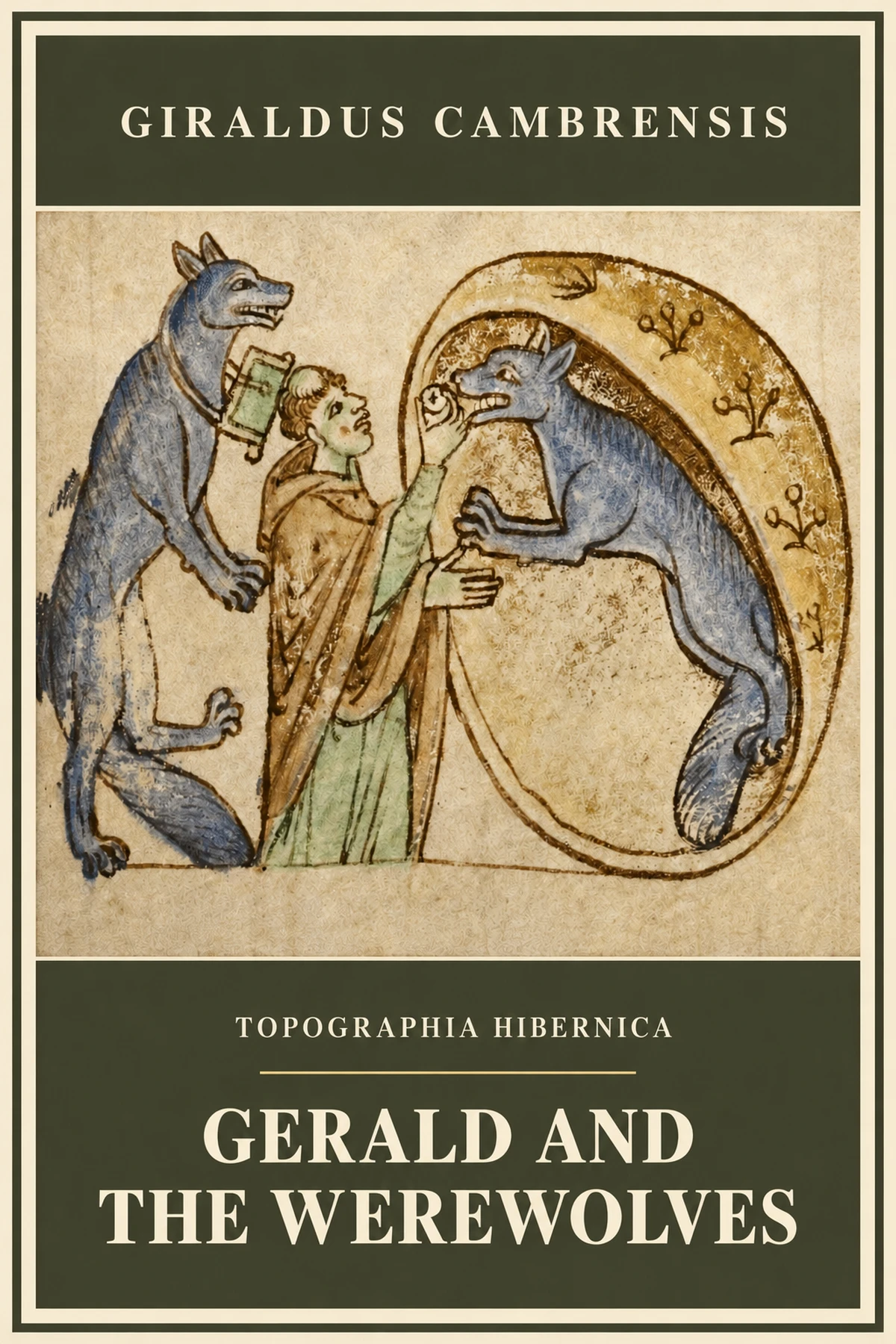
Once you have read Petronius, the next werewolves in Latin are medieval ones. In Gerald and the Werewolves (1,267 words, 6.6), a priest in Ireland meets a talking werewolf who says he is a human being under a curse, and is taken to the dying she-wolf beside him, who turns out to be a human woman. In Arthur and Gorlagon, King Arthur sets out to understand women and ends up at the table of King Gorlagon, who tells him a story: a king whose unfaithful wife strikes him with a magic branch and turns him into a wolf that still thinks like a man. It is longer (4,431 words), a little harder (6.0), and darkly funny. The text is Kittredge’s 1903 edition of a Bodleian manuscript.
Gerald and the Werewolves
A priest meets a talking werewolf in Ireland. Read the guide →
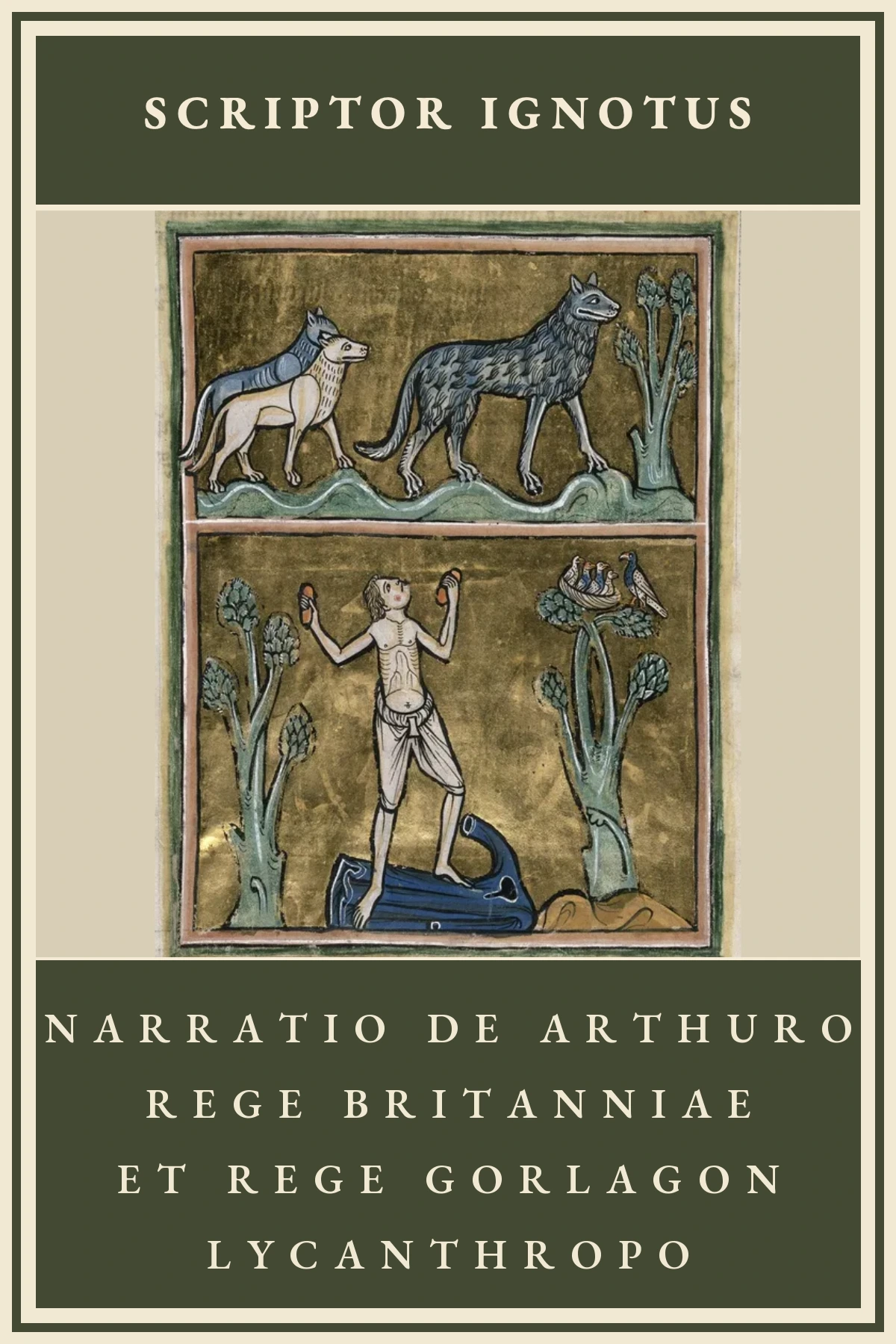
Narratio de Arthuro rege Britanniae et rege Gorlagon lycanthropo
Arthur’s quest ends at the table of a king who was once a wolf.
In the reader
Satyricon 61–62, with every word defined.
Satyricon 61–62, 455 words in 32 sentences, from Merrill’s Fragments of Roman Satire (1897), which prints Bücheler’s 1895 text. Long vowels are marked throughout. Every word has a definition, lemma and form, and five short notes come from K. F. Smith’s commentary: on Orcus, the roadside tombs, the stripping, the circle, and one corrupt phrase.
Read next
Roman ghost stories and Latin horror stories →
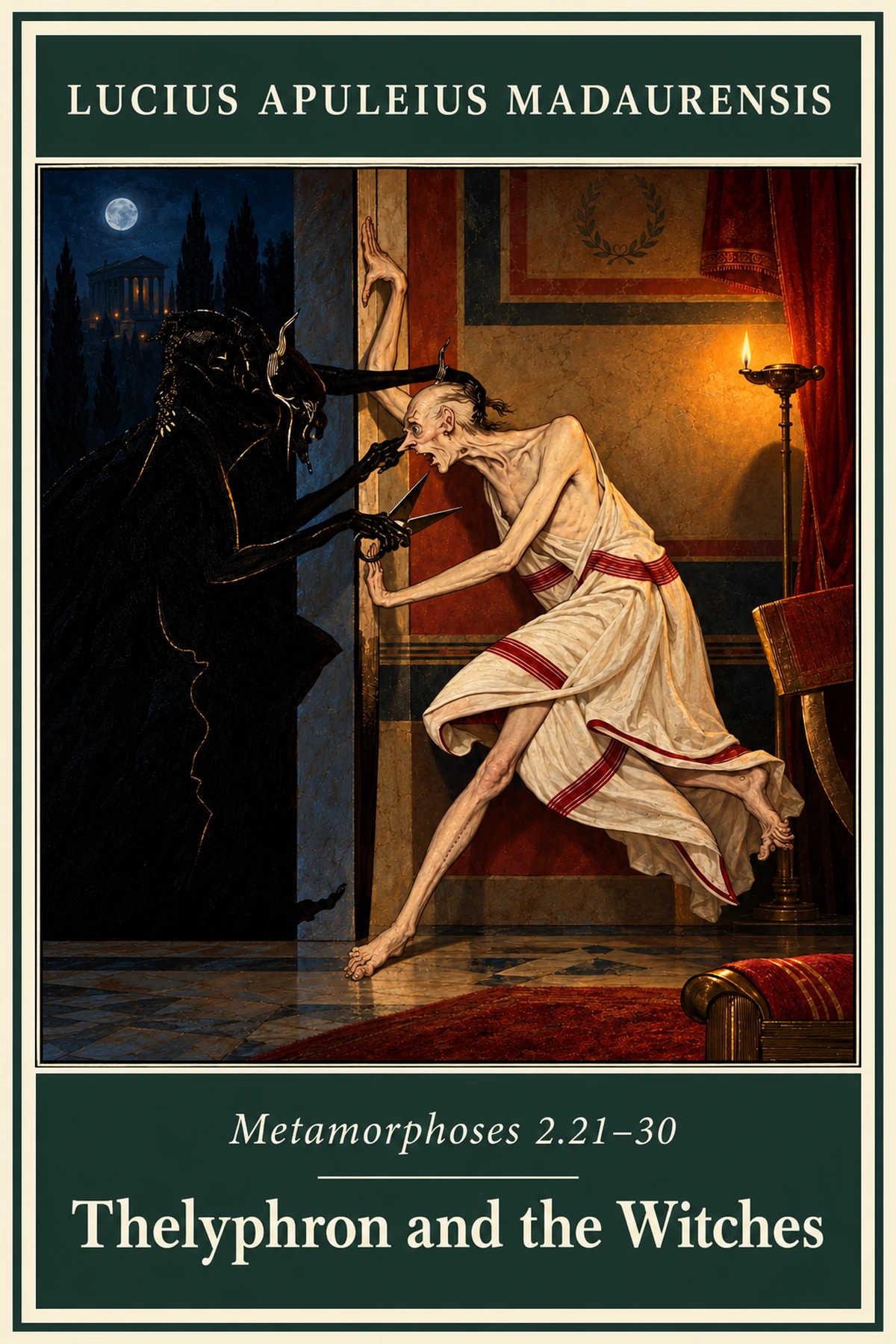
Thelyphron and the Witches
Apuleius’s novel has witches too, and a corpse that talks.
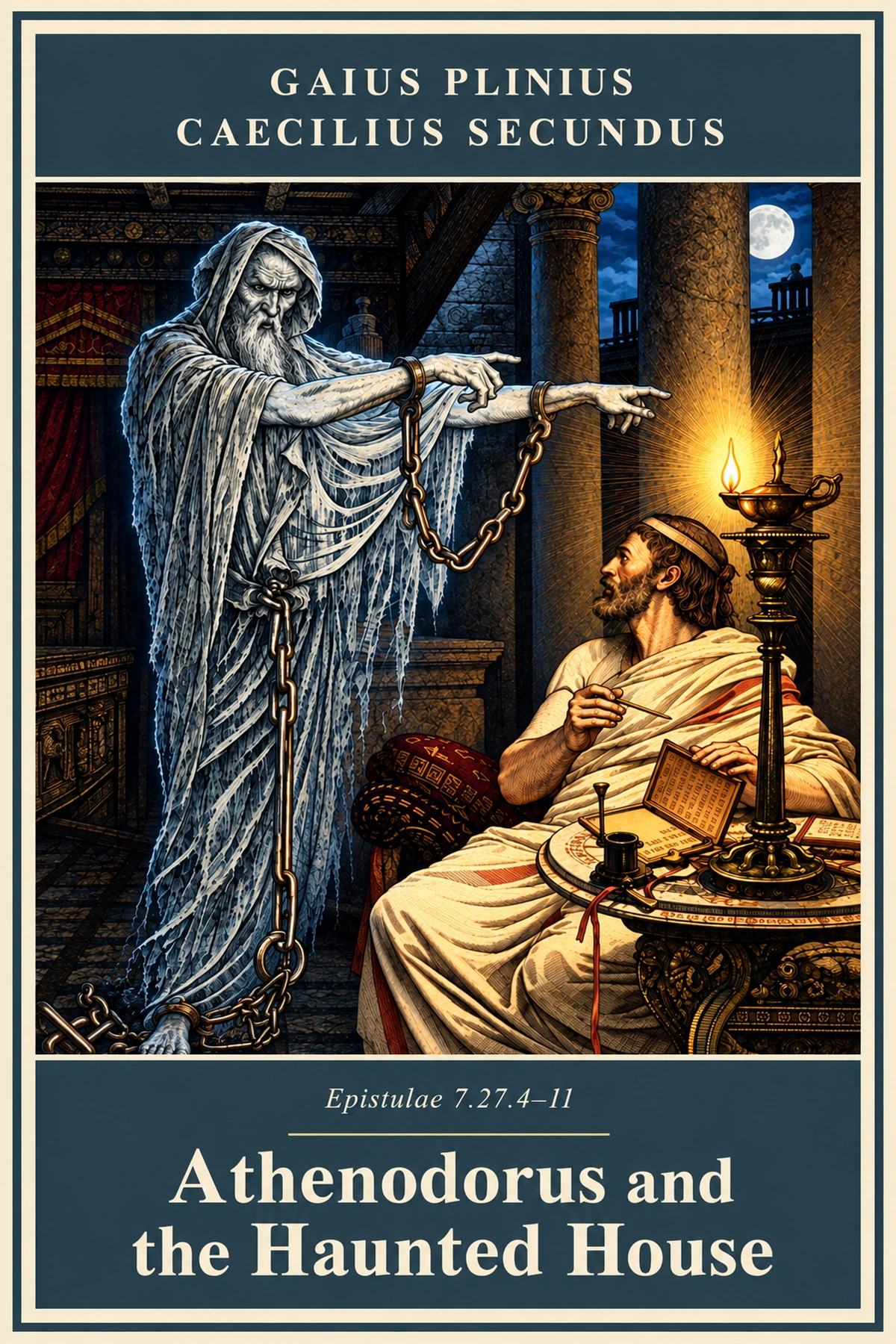
Athenodorus and the Haunted House
The most famous ghost story in Latin.
Sources & further reading
- E. T. Merrill, Fragments of Roman Satire from Ennius to Apuleius (New York: American Book Company, 1897), pp. 101–103, printing Bücheler’s 1895 text
- K. F. Smith’s commentary on the Satyricon (notes quoted in the reader)